Plum Noir is a mood rendered in petals and candlelight, not a single color. The deepest marriage of burgundy and violet, cooled to the edge of black, warmed back by amber glass and taper flame. If you are building a dark romance wedding, your florals and tablescapes are where the palette becomes something guests can reach out and touch.
This guide covers specific blooms, bouquet composition, and tablescape styling, the kind of detail you can hand directly to your florist.
In This Article
Blooms That Belong in a Plum Noir Palette
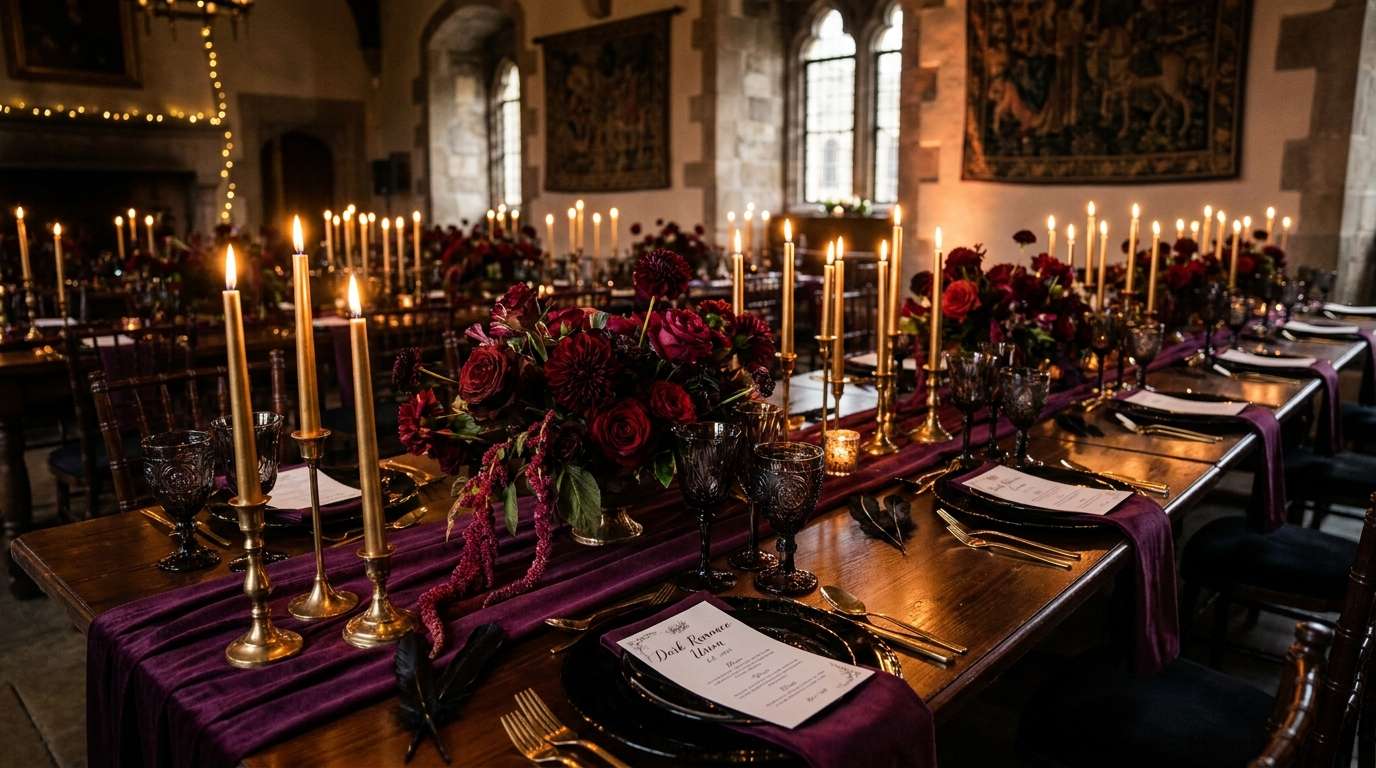
The strength of a Plum Noir arrangement lies in tonal depth, layering blooms that shift from oxblood to deep plum to near-black, with just enough amber warmth to keep the composition from going cold.
Burgundy and oxblood: Garden roses are your anchor. Black Baccara and Black Magic varieties open into dense, layered heads with the darkest red tones available in commercial floristry. Dark ranunculus and deep crimson carnations fill similar roles at a lower price point. Do not overlook carnations, which have shed their dated reputation entirely in modern dark-palette arrangements.
Plum and deep purple: Purple lisianthus brings a ruffled, almost peony-like texture in a true plum tone. Queen of Night tulips are iconic (nearly black with a violet undertone), though they are seasonal and best sourced in late winter through spring. Dark sweet peas add movement with their trailing habit, and hellebores contribute an architectural quality that reads as deliberately curated.
Black accent: Scabiosa with its dark center, black dahlias, and chocolate cosmos (which carry a faint cocoa scent) provide the near-black punctuation marks that give a Plum Noir arrangement its drama.
Amber and warm neutrals: Dried lunaria, toffee roses, and dried grasses introduce the Candlelight Amber (#C4956A) warmth that keeps the palette from reading as purely gothic. Use bleached pampas sparingly: a few stems, not a cloud.
Foliage: Burgundy-leaf eucalyptus, dark plum branches, and trailing amaranth in burgundy tones. Skip anything bright green. It breaks the mood.
What does not belong: pastel roses, baby’s breath, and lavender. All three pull the temperature in the wrong direction. If your florist suggests them as filler, redirect toward dark sweet peas or chocolate cosmos instead.
Bouquet Composition
A Plum Noir bouquet should feel organic and asymmetrical: not tight, not round, not structured into a dome. Think of it as gathered rather than arranged.
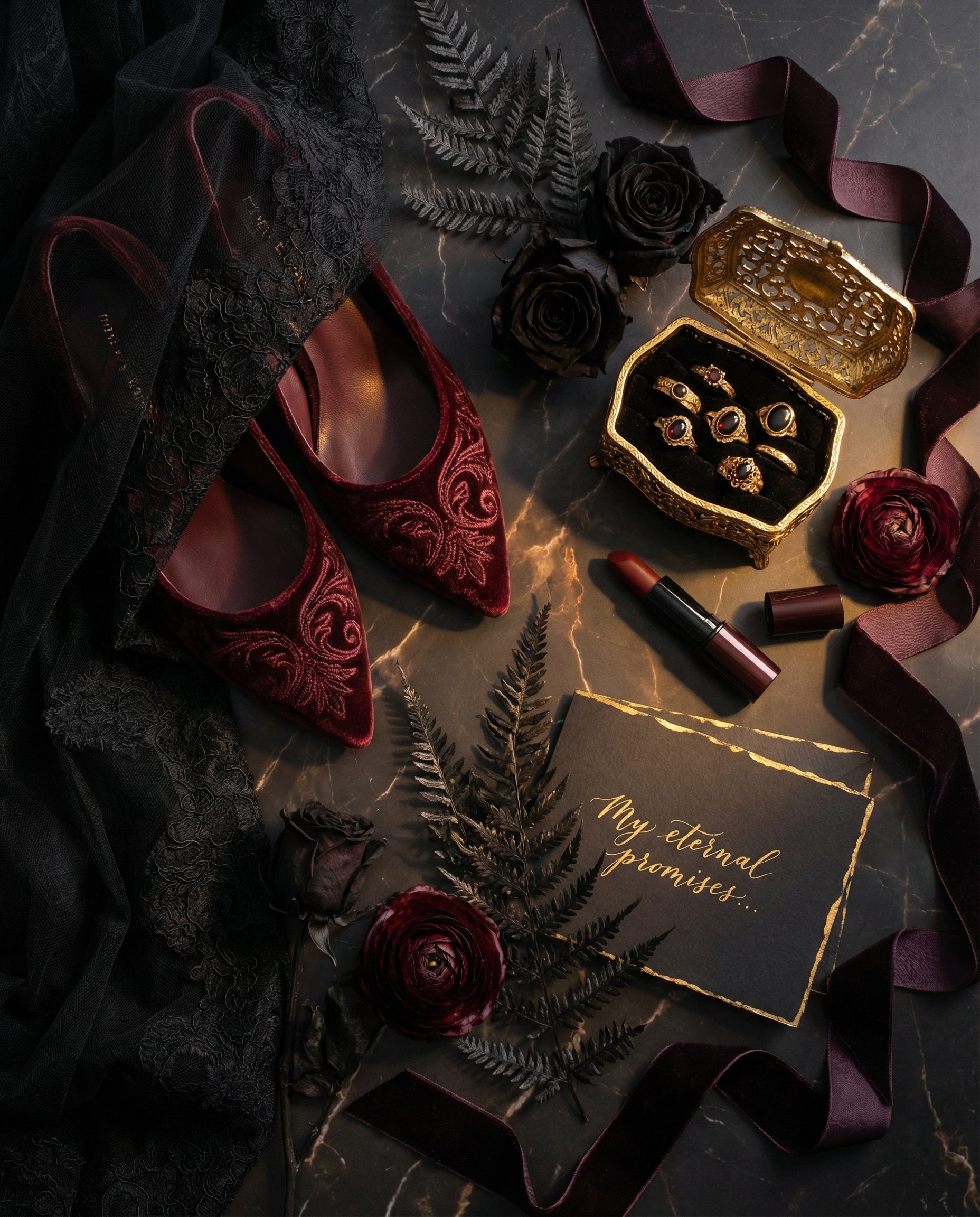
Anchor the center with large-face blooms: garden roses and dahlias in the deepest oxblood and plum tones. Layer dark ranunculus and plum lisianthus around and beneath them, filling the middle density. Let trailing amaranth or dark greenery extend downward and outward for movement. The bouquet should feel alive, not contained.
Finish with a few amber-toned dried elements, woven through the upper third of the arrangement: lunaria, toffee roses, dried grasses. These catch the light and provide the metallic warmth that echoes across your stationery and table settings.
For the ribbon wrap, dark velvet in Plum Noir or oxblood. Never satin. The sheen competes with the blooms instead of supporting them. Let the ribbon tails hang long.
Tablescape Styling
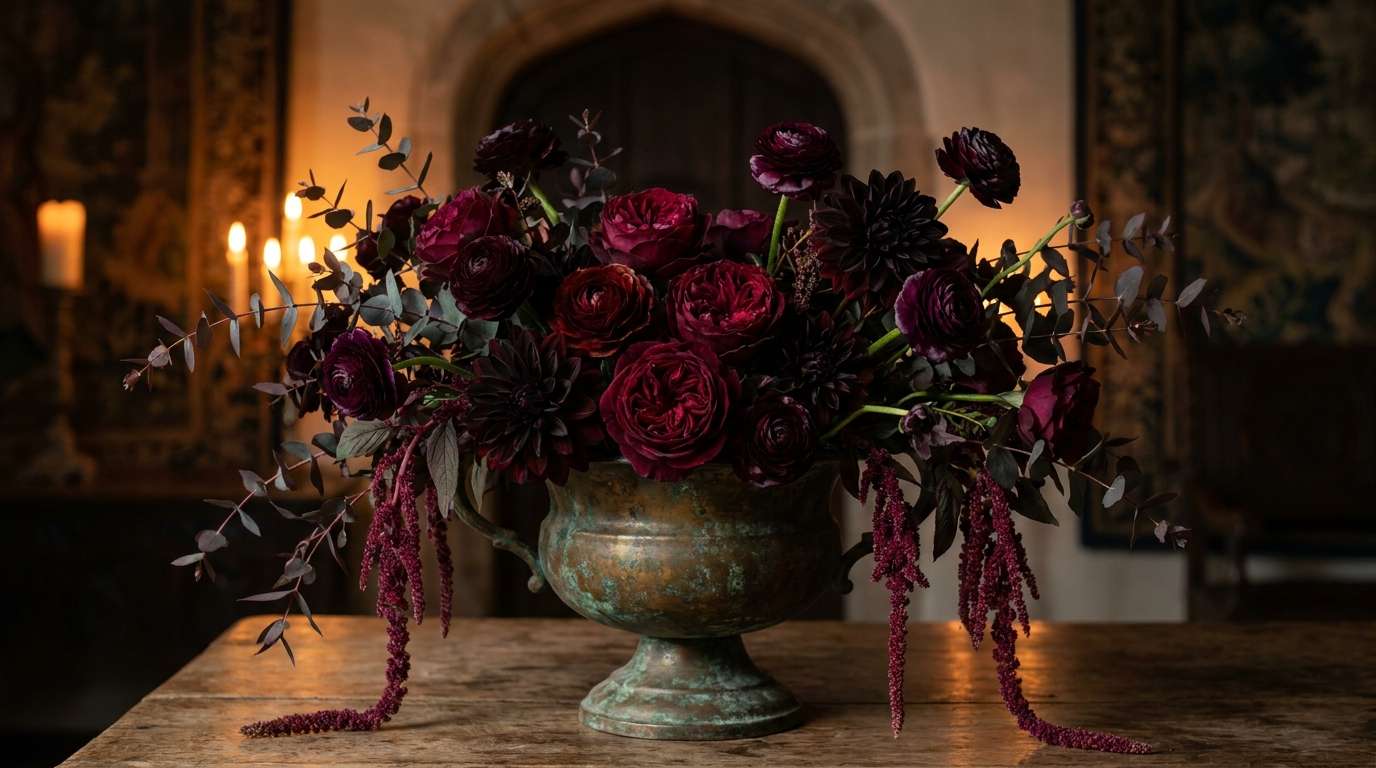
Centerpieces: Low and abundant. Overflowing dark florals in aged brass vessels or dark compote vases, interspersed with taper candles in amber glass holders. The arrangement should feel like it grew there, spilling slightly over the edges, not contained in a neat sphere.
Table runners: Full-length velvet in Plum Noir or oxblood, puddling slightly at the floor. Velvet absorbs candlelight in a way that linen cannot replicate, and the weight of the fabric grounds the entire table.
Place settings: Black chargers provide the dark foundation. Layer with cream linen napkins cinched with an oxblood ribbon, and set amber-toned glassware at each place. The contrast between dark charger and warm glass draws the eye down the table.
Candlelight: Taper candles running the full length of the table, with pillar candles in hurricane glass at varying heights. No fairy lights, no string lights. The goal is the warm, directional glow that only real flame provides.
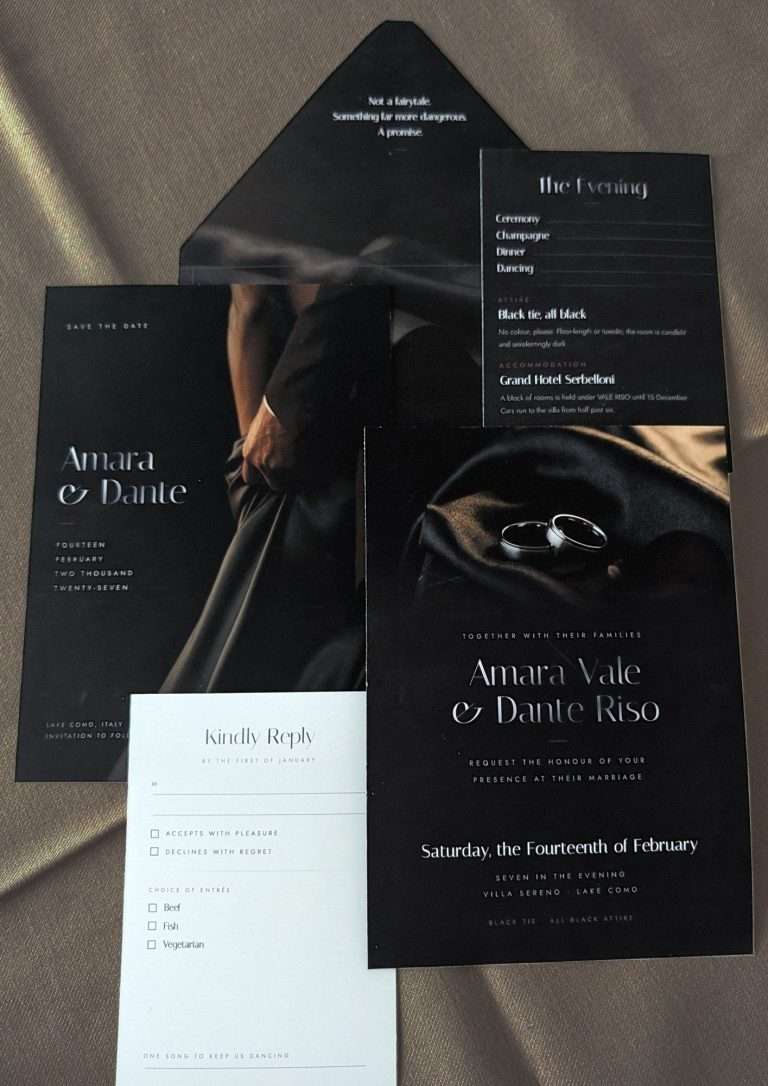
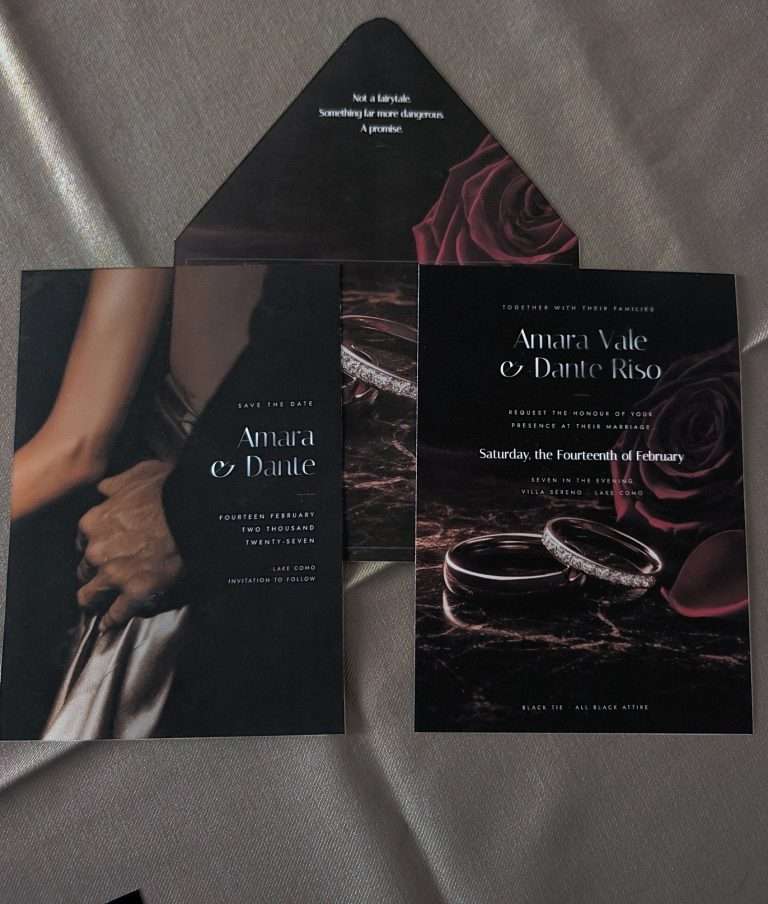
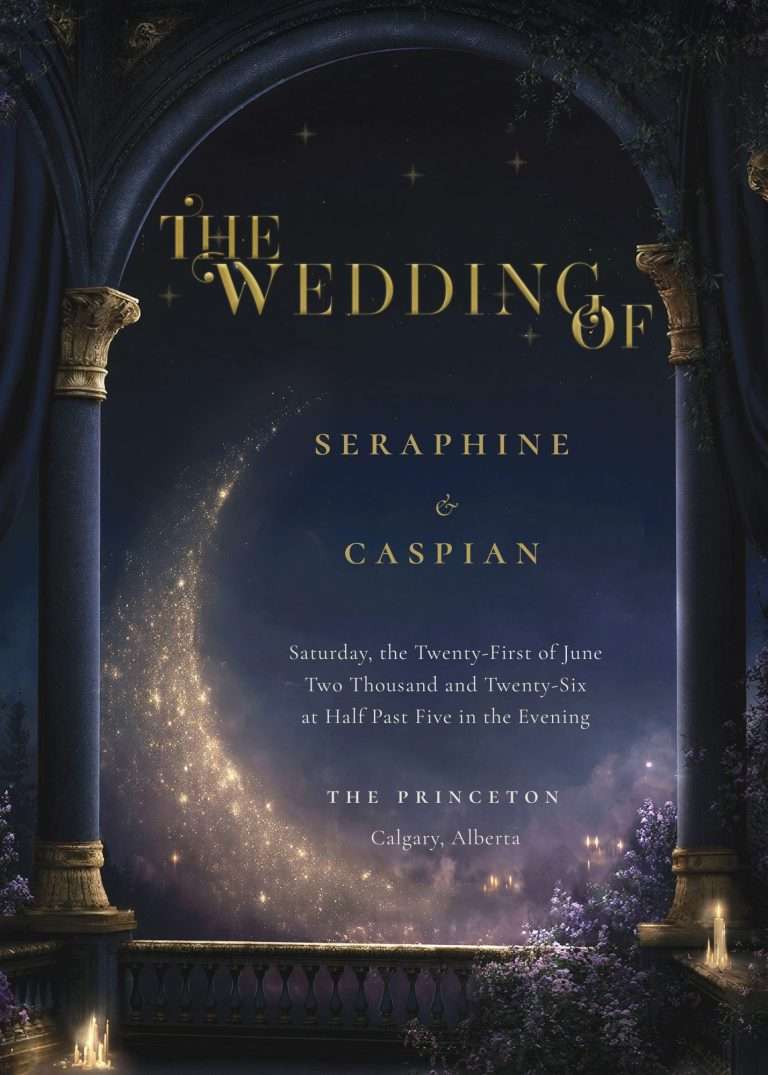
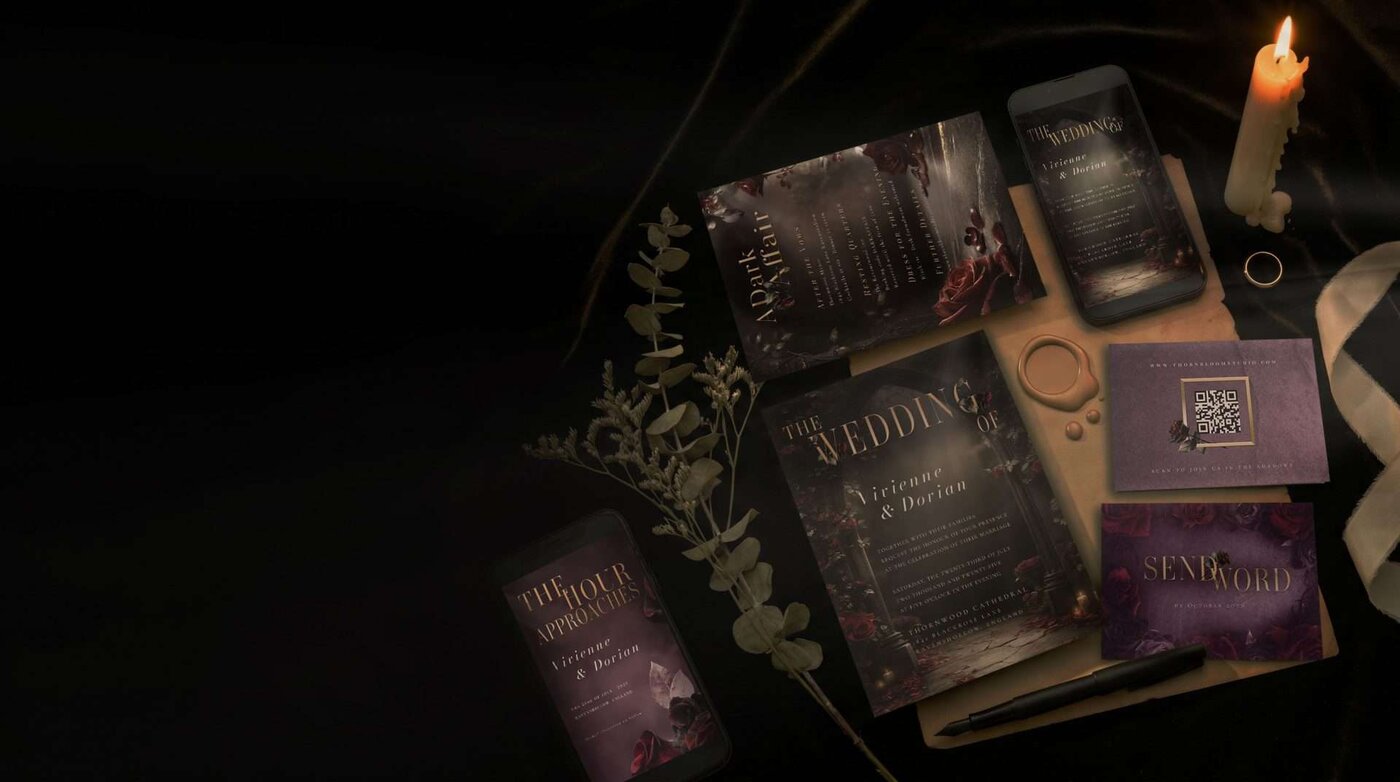
Stationery on the table: This is where your printed pieces complete the immersion. Menu cards propped at each setting, place cards at every plate, table numbers visible from across the room, all in the matching Dark Romance palette. When your florals, your velvet, your candlelight, and your Dark Romance stationery suite share the same visual language, the table stops being a table and becomes a scene.
For the full plum noir wedding inspiration beyond florals and tables, from ceremony styling to fashion, that guide covers the complete vision.
Working with Your Florist
Bring specifics. Share the hex codes: Oxblood #5C1A1B, Plum Noir #351E28, Candlelight Amber #C4956A, along with reference images from your mood board or from the ThornBloom blog. The more precise your brief, the closer the final arrangement lands to your vision.
Request a mock-up arrangement before committing to full production. Most florists will build a sample centerpiece or a bouquet trial for a separate fee, worth every dollar when you are working with an unconventional palette.
One seasonal note: dark blooms are most abundant from late summer through fall, which makes autumn weddings the natural home for Plum Noir florals. Year-round availability varies by region, so ask your florist about substitutions early. The key is maintaining tonal depth. The specific variety matters less than the color staying in range.
Coordinate your stationery with your florals. The Dark Romance Essentials Suite matches the same palette your florist is working from.
Start planning your dark romance wedding: Download our free wedding planner. Grab yours here.