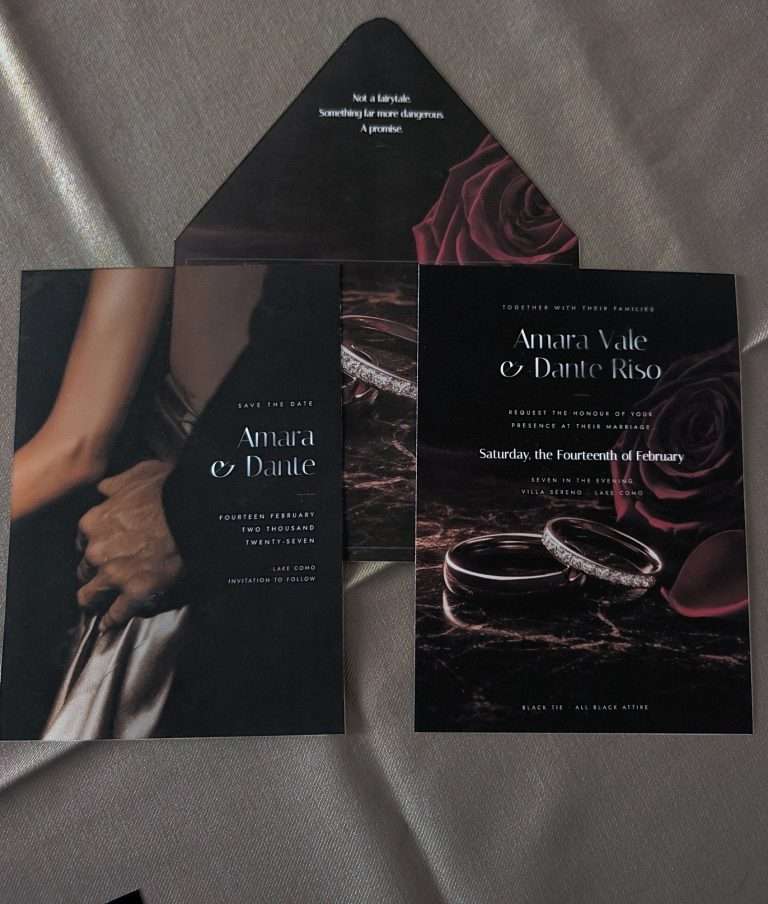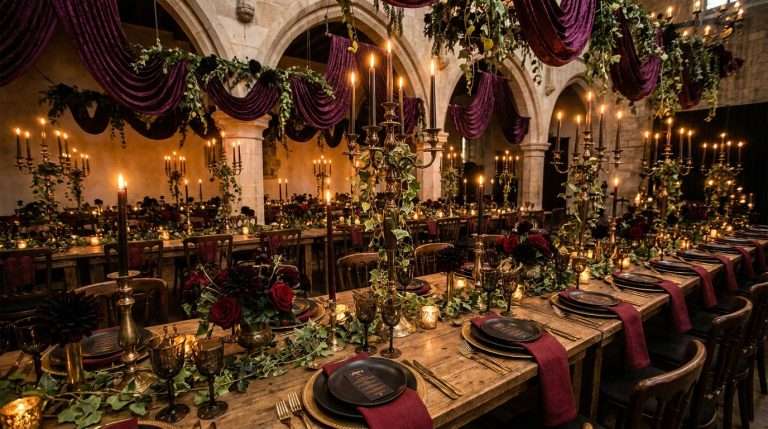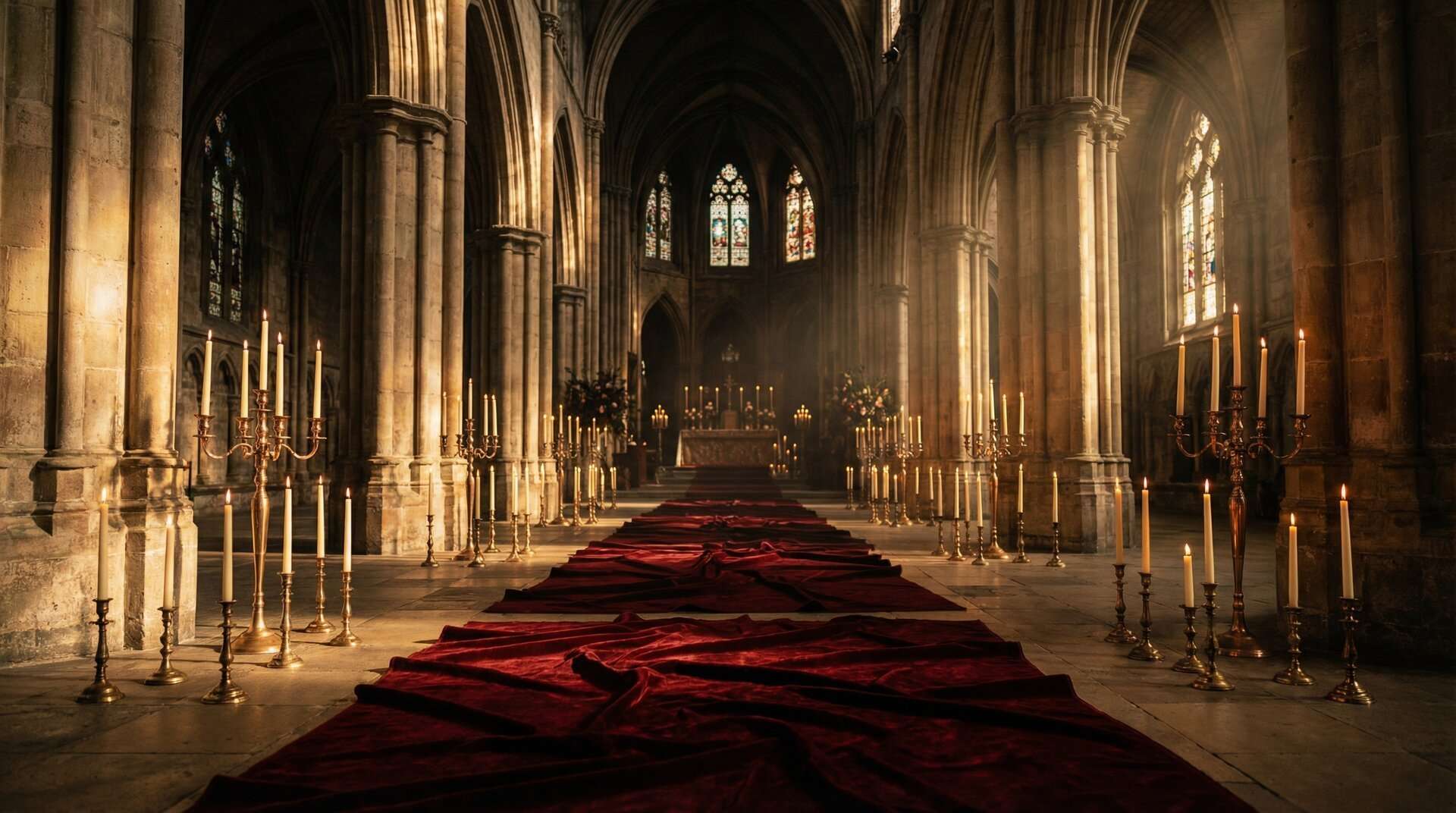
Stone vaults rising into shadow. Candlelight pooling on a slate floor. The echo of footsteps down an aisle flanked by taper candles in wrought-iron holders. The cathedral gothic wedding aesthetic is about architecture, not decoration. The building itself is the centerpiece, the atmosphere, and the emotional anchor of the day. Every design decision you make either honors that architecture or competes with it.
This is one of several dark wedding aesthetics surging in 2026, and for good reason. Couples are moving away from rustic charm and minimalist elegance toward ceremony spaces that feel sacred, weighty, and dramatic, spaces that demand you feel something the moment you walk through the doors.
Here is how to build a cathedral gothic wedding from venue to reception to the stationery that sets the tone before guests ever arrive.
In This Article
What Defines the Cathedral Gothic Aesthetic
Cathedral gothic is rooted in medieval architecture: pointed arches, ribbed vaults, stone walls, and rose windows that filter light into something reverent. If your venue has these elements, your job is enhancement, not transformation. The single biggest mistake couples make with gothic venues is over-decorating. The building is already doing the work.
Candlelight is the primary light source, full stop. Taper candles, pillar candles, candelabras on every surface: the goal is a warm, flickering glow that softens the stone and creates movement. Overhead lighting should be dimmed to near nothing. The drama of a cathedral comes from contrast: pools of amber light surrounded by deep shadow.
The palette is dark and warm: oxblood, plum, black, and warm metallics set against cool stone. This is where the cathedral gothic aesthetic intersects with dark romance: the architecture provides the structure, and the palette provides the warmth.
Why is this aesthetic resonating now? Because couples want ceremony spaces that feel ancient, spaces with weight, history, and presence. A cathedral does not need a welcome sign to tell guests something important is happening. The room says it for you.
Cathedral Gothic Venues
The ideal venue has the bones already. You are looking for pointed arches, stone or brick walls, high ceilings, and, crucially, limited natural light. In most wedding venue searches, natural light is treated as a selling point. For a cathedral gothic wedding, low light is the feature, not the limitation. You want a space that begs for candlelight.
Historic churches and chapels with genuine gothic architecture are the obvious first choice. Many rent for ceremonies even outside their congregation, and the architecture is unmatched, centuries of craftsmanship that no event designer can replicate.
Converted church venues offer the architecture with added flexibility. A decommissioned church that now operates as an event space gives you the arches and the stone without liturgical restrictions, and often allows ceremony and reception in a single space.
Cathedral-adjacent venues carry the mood without the church setting. University halls with gothic arches, castle great halls, stone manor houses, and historic estates with vaulted cellars all evoke the same architectural weight. Look for pointed arches, heavy stone, and rooms that feel like they were built for candlelight.
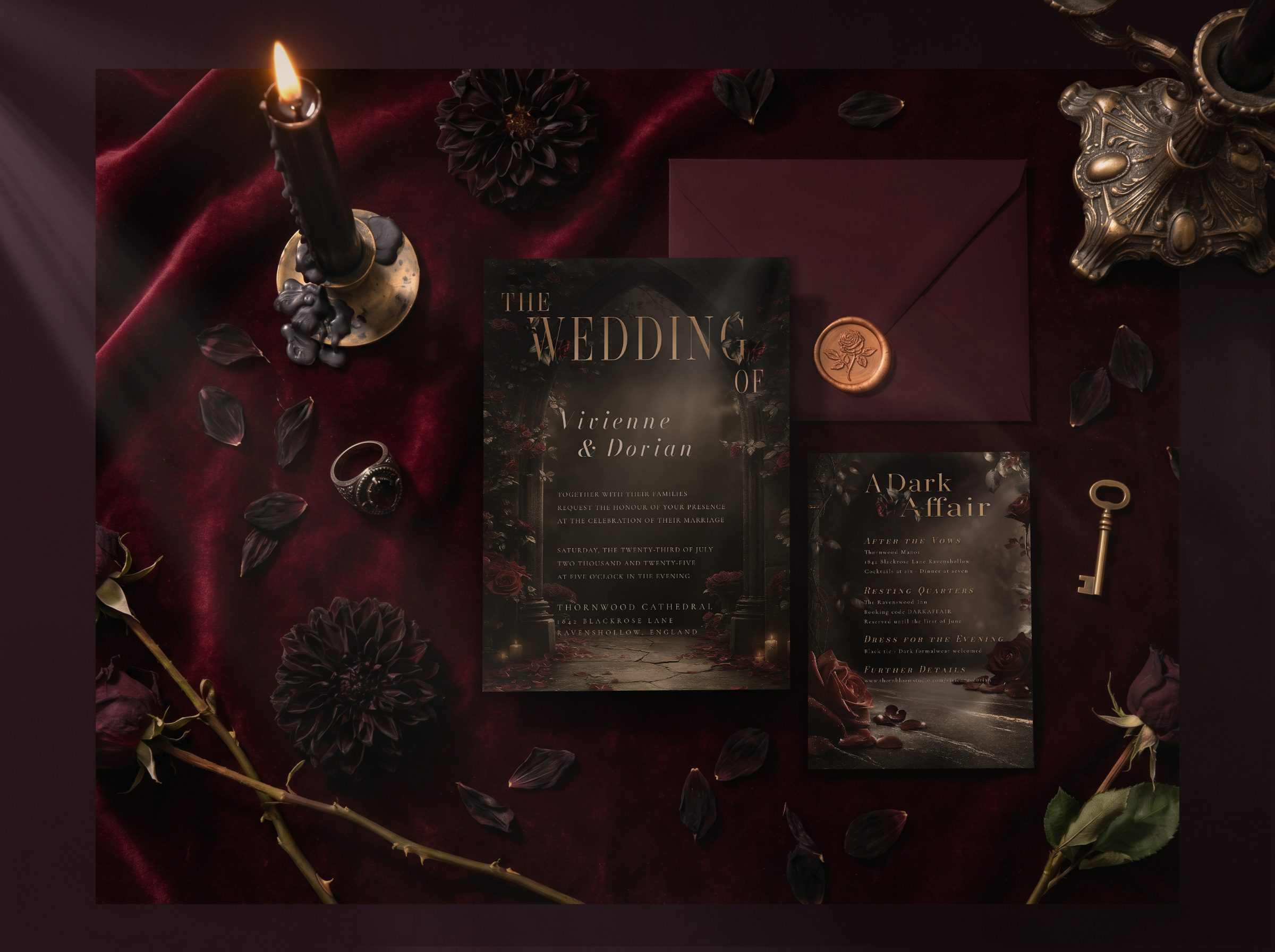
Outdoor alternatives can work if you bring the architecture with you: gothic arch backdrops in a courtyard or garden, flanked by candelabras, create the silhouette of a cathedral aisle against an open sky. The contrast of gothic structure against natural landscape can be striking, though it does require more intentional design.
Ceremony Design
The ceremony is where the cathedral gothic aesthetic reaches its full power. Every element should feel like it belongs in the space, as though the candles and florals have always been there, placed centuries ago by someone who understood that this room was built for exactly this kind of moment.
The Aisle
Line the aisle with taper candles in wrought-iron holders, not glass hurricanes, not lanterns, but simple iron that looks forged. Place dark floral arrangements at alternating pew rows, not every row. Restraint matters here. A gothic aisle should feel like a procession, not a garden path. If your venue allows, use a dark fabric runner (deep wine velvet or Cathedral Black) instead of the traditional white. A white runner in a gothic cathedral is a visual contradiction.
The Altar
The most important rule: do not compete with the arches. If you are standing beneath a pointed stone arch, that arch is your altar backdrop. Add candlelit arrangements at varying heights (tall candelabras flanking the couple, cascading greenery that echoes the architectural lines) but let the architecture dominate. Asymmetrical floral installations work beautifully in gothic spaces because they feel organic against the rigid geometry of the stone.
Lighting
If your venue permits it, make candlelight the only light source for the ceremony. The transformation is extraordinary: every surface catches the flicker, the shadows deepen, and the entire room feels alive. If full candlelight is not possible, dim the overhead fixtures as far as they will go and supplement with warm amber uplighting on the stone walls only. Never uplight in cool tones. And no fairy lights, no string lights. Those belong to a different aesthetic entirely. The cathedral gothic mood lives in the contrast between warm light and deep shadow, not in even ambient glow.
Reception in a Gothic Setting
The reception is where many couples lose the thread. The ceremony felt ancient and sacred, and then the reception space has round tables with white linens and a DJ booth. Maintaining the gothic wedding aesthetic through the reception requires intentional choices that extend the mood without tipping into costume.
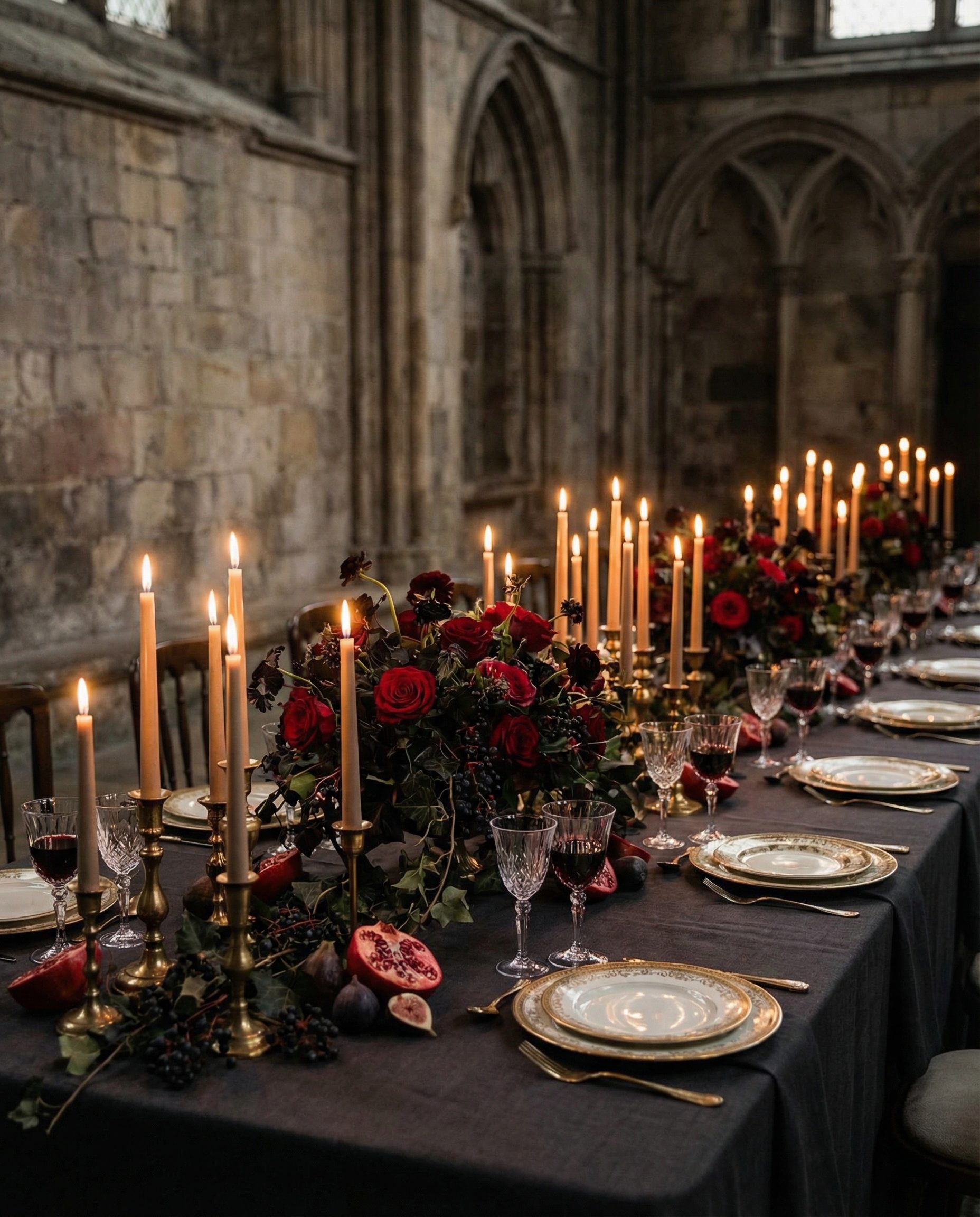
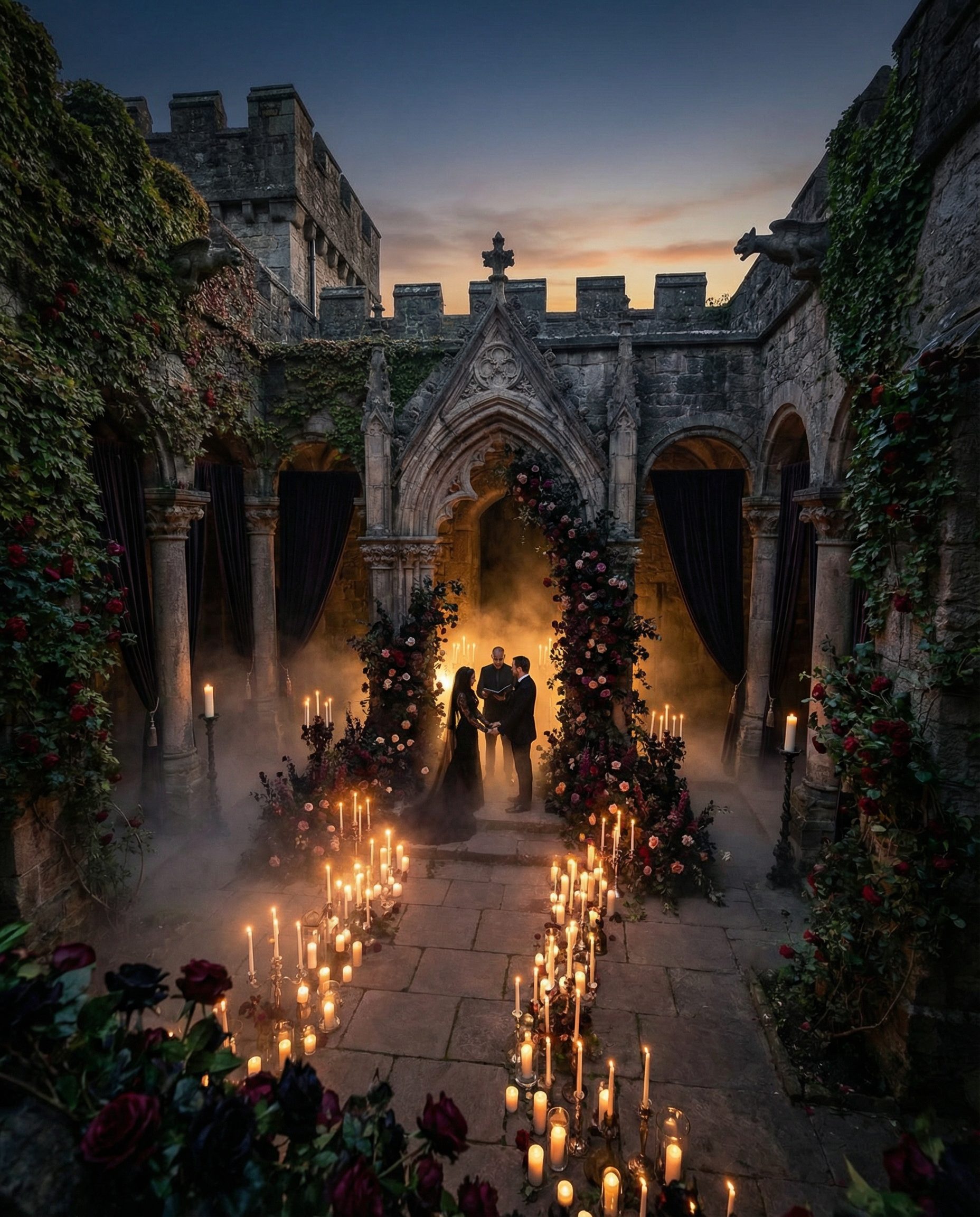
Long banquet tables, not rounds. Nothing evokes a great hall feast like a long table set with taper candles down the center. If your space and guest count allow it, one continuous table or a few long parallels will transform the room. This is about the visual line, not medieval cosplay. A long table with candlelight creates depth and intimacy that rounds cannot achieve.
Dark linens, warm metallics. Plum Noir or deep wine table linens, black charger plates, amber glassware that catches the candlelight. The tabletop should feel layered and rich: velvet, matte, and metallic textures working together.
Moody floral centerpieces. Dark roses, dahlias, plum ranunculus: arrangements that feel lush and slightly wild, not manicured. Keep the height varied: some tall candelabras with trailing greenery, some low and dense clusters of blooms. The unevenness is part of the beauty.
Tablescapes that feel medieval without cosplay. This is the critical distinction. You want sophistication, not costume. A wrought-iron candleholder evokes a great hall. A plastic goblet shaped like a chalice does not. Every element should feel as though it could exist in a contemporary luxury setting and in a centuries-old manor. That overlap is where the cathedral gothic aesthetic lives.
Music matters. The sound should match the stone: a string quartet, a pipe organ prelude, acoustic arrangements. Nothing breaks the atmosphere faster than a sound system that belongs in a different room.
Stationery That Matches the Stone
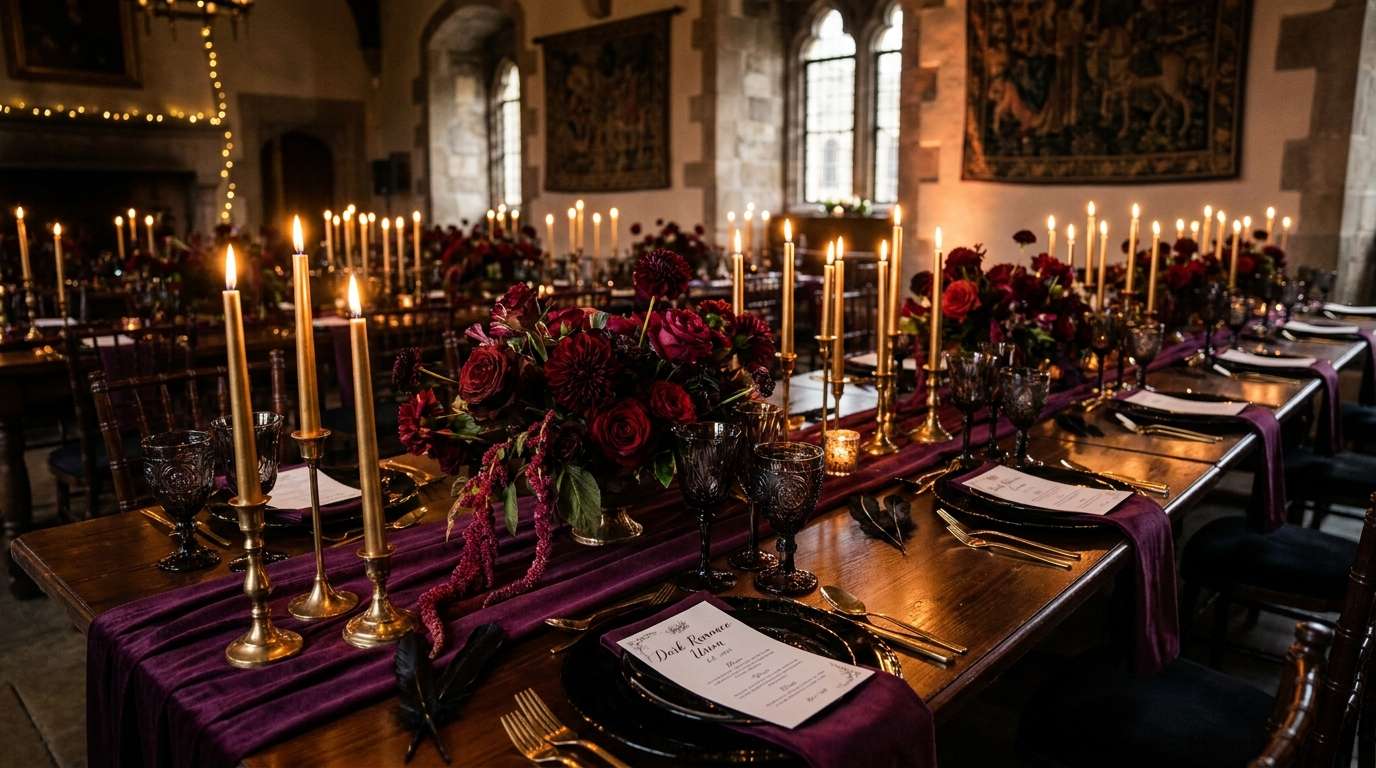
The stationery is where the cathedral gothic mood begins, months before the ceremony, when guests open an envelope and see for the first time what kind of wedding this will be. If the invitation feels warm, dark, and architectural, you have set an expectation that every other element of the day will fulfill.
Look for cathedral arch framing on invitations, since the pointed arch motif carries the architectural language from venue to paper. Full-bleed dark backgrounds with warm metallic typography set the tone immediately. This is not a pastel garden party. This is something richer, deeper, and more deliberate.
ThornBloom’s Dark Romance Essentials Suite was designed specifically for this mood, six coordinated pieces with oxblood florals on Plum Noir backgrounds and Candlelight Amber metallic type. The suite carries the cathedral gothic atmosphere from invitation through details card, so the aesthetic is cohesive from the first save-the-date to the reception signage. Every piece is set for you by the studio: you send your wording, approve a proof, and receive your finished PDFs, with most pieces also available printed and shipped through the studio’s printing partners.
Coordinated pieces matter here more than in most aesthetics. When the stationery, the table numbers, the menus, and the welcome sign all speak the same visual language, the immersion is complete. Guests should feel the same mood opening the invitation at home as they do stepping into the cathedral on the day.
For the full vision, palette, planning, and every design decision from start to finish, explore our complete dark romance wedding guide. And if you are still pulling your vision together, the dark fantasy wedding inspiration collection can help you find the thread that ties it all together.
Ready to start planning? Download the free wedding planner and map out every detail, from venue tours to vendor palettes to your stationery timeline.