There is a particular kind of vertigo that arrives the moment you start pricing your wedding. The venue alone could fund a small expedition. The florist sends a quote that makes your pulse quicken. The photographer, the caterer, the band, the cake. Every number feels both necessary and impossible, and suddenly the celebration you are dreaming of starts to feel like something that belongs to someone with a different bank account.
Take a breath. The vertigo is normal. It is also solvable.
Setting a wedding budget is not about shrinking your vision until it fits inside a spreadsheet. It is about understanding where your money creates the most meaning, where every dollar builds the atmosphere, the emotion, and the story of the day, and releasing what does not serve that vision. The couples who feel most at peace on their wedding day are not the ones who spent the most. They are the ones who spent intentionally.
This guide will walk you through how to set a wedding budget that reflects your priorities, stays grounded in reality, and leaves room for the details that matter most. And yes, we will show you where digital stationery can save you hundreds without sacrificing a single ounce of beauty.
If you have not already mapped out your overall planning timeline, start with our Wedding Planning Timeline Template. It pairs perfectly with the budgeting strategy below.
In This Article
Why Most Wedding Budgets Fail
Before we build a budget that works, it helps to understand why so many do not.
The most common reason wedding budgets fall apart is not reckless spending. It is invisible costs. Couples set a number, allocate it across the major categories, and then discover a constellation of expenses no one warned them about: service charges, gratuities, alterations, postage, cake cutting fees, overtime charges, and a dozen other line items that were not in any Pinterest planning guide.
The second reason is emotional spending. You walk into a floral consultation with a clear number in mind, and then the florist shows you trailing amaranthus cascading over a candlelit tablescape, and the number dissolves. That reaction is not weakness. It is a sign that the element matters to you. The problem is not the emotion. The problem is not having a framework to absorb it.
A functional wedding budget planner accounts for both: the hidden costs and the emotional ones. It builds in a buffer, prioritizes categories by personal importance, and gives you clear permission to spend more in the places that carry the most weight for your celebration.
Step 1: Determine Your Total Number
Start with what is real. Before you browse venues or collect quotes, sit down with your partner and answer three questions:
What can you contribute from savings? This is money that already exists: funds you have set aside or can comfortably redirect without creating financial stress after the wedding. Your celebration should not start your marriage in a state of anxiety.
Will family members contribute? If parents or other family members have offered to help, have the conversation early and get specific. A vague promise of support is not a number you can plan around. Ask what they are comfortable contributing, whether it comes with conditions, and when the funds will be available.
What can you save between now and the wedding? If your wedding is 12-18 months away, calculate what you can set aside each month. Even modest monthly contributions add up significantly over a year.
Add these together. That is your working number. Write it down. It will feel either reassuring or sobering, and both reactions are productive. You now have a foundation instead of a fantasy.
Step 2: Build Your Category Breakdown
Every wedding has roughly the same cost categories, but how you distribute your money across them should be personal. The traditional percentage breakdowns you find online are starting points, not commandments.
- Venue and catering: 40-50%
- Photography and videography: 10-15%
- Florals and decor: 8-12%
- Music and entertainment: 5-8%
- Attire and beauty: 5-8%
- Stationery: 2-4%
- Officiant and ceremony: 1-3%
- Favors and gifts: 1-3%
- Transportation: 1-3%
- Contingency buffer: 5-10%
That last line is essential. A contingency buffer of at least 5% is not pessimism. It is the single most effective tool for keeping your budget intact. It absorbs the invisible costs, the last-minute additions, and the one category where you decide to stretch because it truly matters.
Prioritize by Meaning, Not Convention
Here is where your budget becomes yours. Sit with your partner and rank your categories by emotional importance. Judge by what will create the most lasting impact for your celebration, not by what wedding culture tells you to prioritize.
If atmospheric lighting and dramatic florals are what transport your guests into the world you are building, allocate more there and less toward favors. If photography is the single investment you want to protect, give it 15% and adjust elsewhere. If the stationery is the first moment your guests encounter your story and you want that moment to feel immersive and extraordinary, give it the room it deserves.
A budget built around your priorities will feel intentional, not restrictive.
Step 3: Track Everything in One Place
A budget only works if you can see it. Scattered notes, half-remembered quotes, and mental math are how costs spiral without warning.
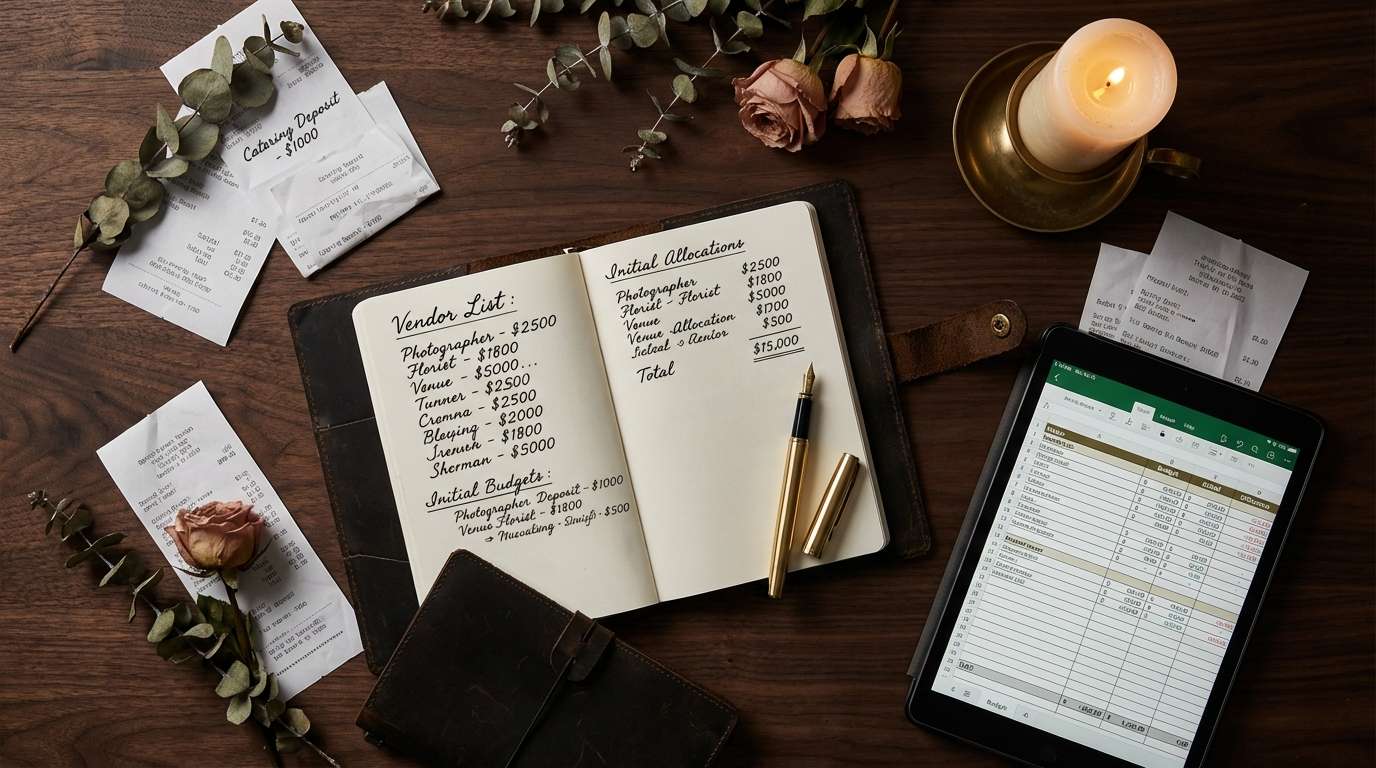
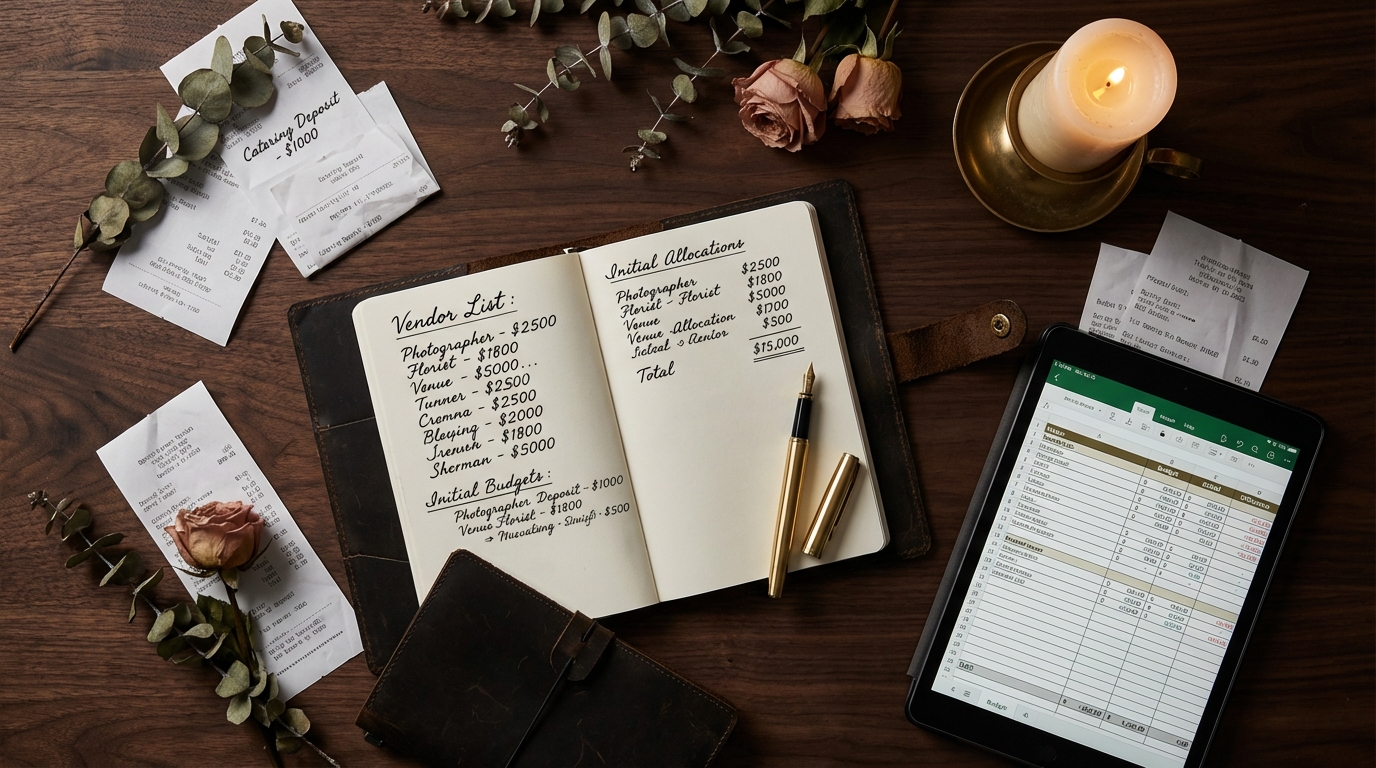
Use a dedicated wedding budget template: a single document where every quote, every deposit, every payment lives together. You need to see your allocated amount, your actual spend, and the difference between them at a glance, for every category, at any time.
Our free Wedding Planner Bundle (Google Sheets planner, Notion workspace, and printable checklist) includes everything you need to organize your wedding finances and timeline. The Google Sheets budget tracker has pre-built categories, running totals, and a clean layout designed to keep your financial picture visible from engagement to honeymoon. The Notion workspace gives you an interactive planning dashboard with linked databases and timeline views. And the printable checklist keeps your timeline and your budget aligned on paper.
Download Your Free Wedding Planner Bundle
The key is updating it consistently. Every time you receive a quote, book a deposit, or make a payment, log it immediately. Five seconds of data entry now prevents five hours of financial confusion later.
Step 4: Get Real Quotes Before You Commit
One of the most common budgeting mistakes is allocating money based on averages rather than actual quotes from your market. A florist in a major metro area may charge three times what a florist in a smaller city quotes for similar arrangements. National averages are useful for rough planning, but your budget needs local reality.
Before you lock in your category allocations, collect at least two to three quotes for your highest-cost vendors: venue, catering, photography, and florals. These four categories typically account for 70-80% of your total spend, so accurate numbers here prevent the largest surprises.
Ask every vendor about:
- Service charges and gratuities: many venues add 18-22% on top of quoted prices
- Overtime rates: what happens if your reception runs 30 minutes long
- Setup and breakdown fees: especially for off-site venues
- Minimum spend requirements: common at hotel and restaurant venues
- Payment schedules: when deposits and final payments are due
Build these into your budget template before you sign contracts. The total cost of a vendor is never just the number on the first line of their quote.
Step 5: Find Smart Savings Without Losing Beauty
Here is where intentional budgeting becomes genuinely rewarding. There are places in every wedding where you can redirect money without losing atmosphere, quality, or emotional impact. The goal is not to cut corners. It is to reallocate toward the elements that matter most.
Choose Digital Stationery Over Traditional Print Design
Traditional custom stationery, the kind designed by a graphic designer and printed by a specialty printer with matching envelopes, liners, and signage, can easily cost $800 to $2,000 or more for a full suite. Add rush fees for last-minute changes, reprinting costs when details shift, and designer revision charges, and the total climbs higher.
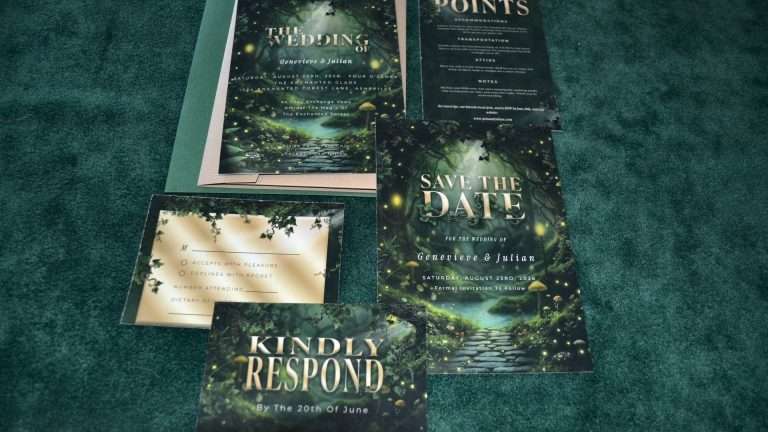
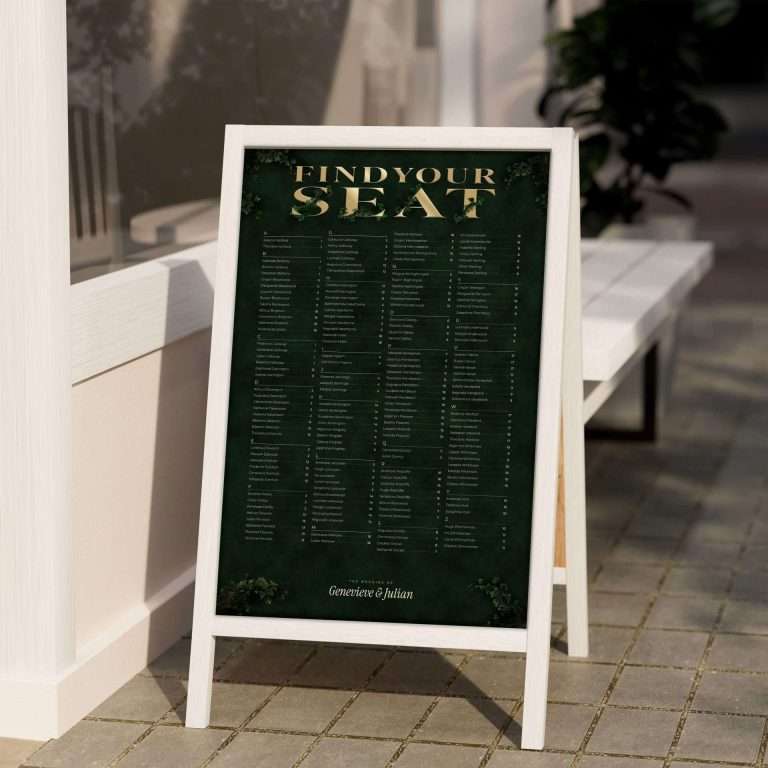
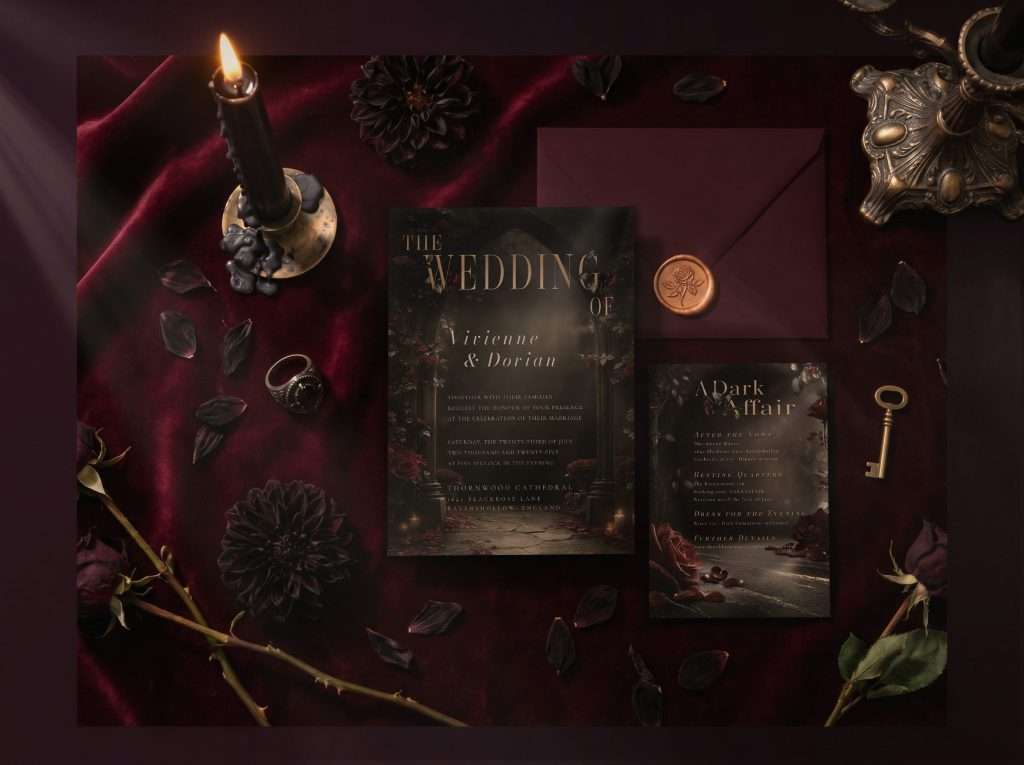
Done-for-you digital stationery delivers the same visual impact at a fraction of the cost. A complete Enchanted Forest suite from ThornBloom Studio, with coordinated invitations, RSVP cards, menus, place cards, programs, welcome signs, seating charts and more, starts at $79.99 for the Essentials Suite and goes up to $249.99 for The Grand Wedding Suite with 27 coordinated pieces.
That is not a compromise. Every piece features full-bleed, illustrated artwork designed to feel immersive and cinematic. You send your wording and the studio sets each piece for you. No software, no layout work, no per-revision fees. When your menu changes after your final tasting, send the update and the studio re-sets the piece; two revisions are included per piece.
The savings are significant:
- Traditional custom stationery suite: $800-$2,000+
- ThornBloom Studio complete suite: $79.99 for the Essentials Suite, up to $249.99 for the Grand Wedding Suite
- Potential savings: most of a traditional stationery budget
Those savings can flow directly into your contingency buffer, your floral budget, your photographer, or any category where additional investment creates more meaning.
For printing, the studio can arrange a printed and shipped option through its printing partners, by quote. Even with professional printing, your total stationery investment remains well below what traditional custom design would cost.
Other High-Impact Savings
- Guest list discipline: Every guest costs $100-$250+ in catering, rentals, and favors. Trimming your list by 10-15 guests can free up $1,000-$3,000 or more. Invite the people who matter deeply and release the pressure of obligation.
- Day and season selection: Friday and Sunday weddings often cost 20-40% less than Saturday events. Off-peak months (January through March, November) bring lower vendor rates and more availability.
- Venue-inclusive packages: All-inclusive venues often provide catering, tables, chairs, linens, and basic lighting in one price. Compare the total cost against a la carte options before assuming a blank-canvas venue is more affordable.
- Prioritize one statement floral piece: A dramatic ceremony arch or a lush head table garland creates more visual impact than identical centerpieces on every table. Use simpler arrangements for the remaining tables.
Step 6: Plan for the Costs No One Mentions
The invisible costs are what break most budgets. Here is a list of frequently overlooked expenses to build into your template:
- Postage: invitations, RSVP return envelopes, and thank-you cards. Oversized or heavy envelopes cost more. (Or send digital invitations and skip postage entirely. Our Digital Basic is designed for exactly this.)
- Alterations: nearly every gown requires alterations, typically $200-$500
- Tips and gratuities: for your DJ, bartenders, hair and makeup artists, delivery drivers, and day-of coordinator
- Marriage license fees: varies by county, typically $25-$100
- Hotel room blocks: some venues require a minimum room commitment
- Welcome bags or gifts: if hosting out-of-town guests
- Day-of emergency supplies: sewing kit, stain remover, first aid, phone chargers
- Post-wedding costs: thank-you cards, photo album, dress preservation
Add a line item for each of these in your budget template. Even if some do not apply to your celebration, having them visible keeps you from being caught off guard.
Step 7: Protect Your Budget With Systems
Set payment reminders. Most vendor contracts have staggered payment schedules: a deposit at booking, a midpoint payment, and a final balance before the wedding. Miss a deadline and you risk late fees or, worse, losing a vendor. Log every due date in your calendar and your wedding planner.
Review your budget monthly. Set a recurring date to sit down with your partner and review where you stand. Compare allocated amounts to actual spending. If one category is trending over, adjust another before it becomes a crisis.
Agree on a decision-making rule. Before any unplanned purchase over a set threshold (say, $200), both partners pause and discuss. Not to gatekeep, but to ensure every spend is intentional and aligned with your shared priorities.
Keep your contingency buffer untouched until the final two months. Early in the planning process, that buffer will be tempting. Resist. The unexpected costs almost always arrive in the final stretch: last-minute rentals, vendor overtime, forgotten details. Your future self will thank you.
Your Budget Is a Creative Tool
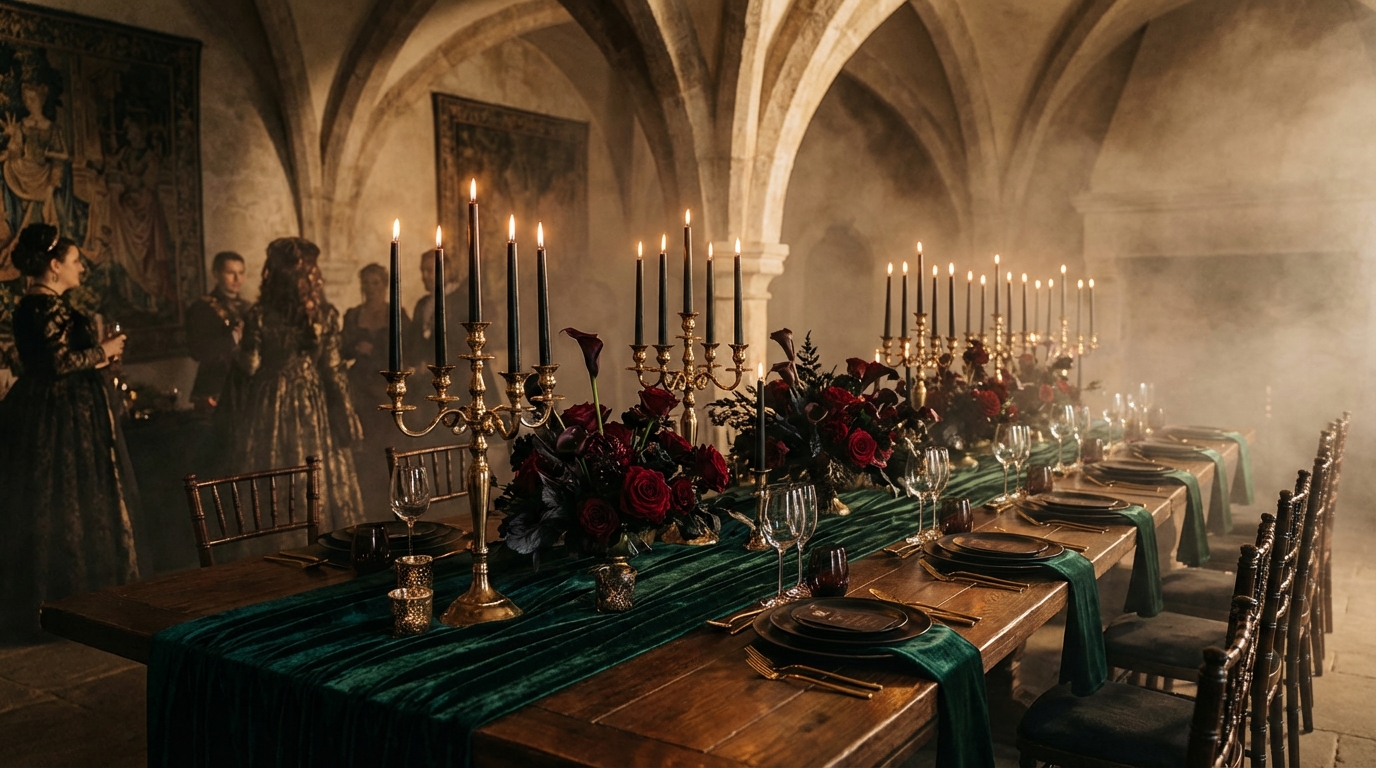
A wedding budget is not a cage. It is a frame: the structure that gives your vision shape and ensures it stands on solid ground. The most beautiful weddings are not the ones with unlimited resources. They are the ones where every element was chosen with care, where nothing is there by accident, and where the atmosphere feels intentional from the first envelope your guests open to the last candle that flickers out.
Start with your total number. Break it into categories that reflect what matters to you. Track everything in one place. Build in a buffer. Find smart savings without sacrificing beauty, and redirect those savings toward the moments that will stay with you long after the last dance.
Your celebration should feel like a world you built on purpose. Your budget is how you build it.
One of the smartest budget moves? Going digital for some pieces and printing others. Learn more in our guide to digital vs. printed wedding invitations.
Not sure which stationery pieces are worth the spend? Our Wedding Stationery 101 breaks down exactly what you need and what you can skip.
Download Your Free Wedding Planner Bundle
Our free Wedding Planner Bundle includes three planners, and every new subscriber gets all three:
- Ultimate Wedding Planner (Google Sheets): 19 tabs, a live dashboard with five stat cards and four auto-updating charts, a budget tracker across 14 categories, dual guest lists, seating, vendors, timeline.
- Interactive Wedding Planner (Notion): five linked databases, an 88-task master checklist across nine phases, RSVP and meal tracking, a vendor pipeline board, a day-of timeline.
- Wedding Planning Checklist (printable PDF): six pages, 90 tasks from twelve months out through post-wedding, in the ThornBloom dark-luxury design.
No purchase, no catch. Join the list and all three arrive by email.
All three are completely free. No catch, no credit card required.
Download Your Free Wedding Planner
ThornBloom Studio creates fully immersive, done-for-you wedding stationery in dark fantasy aesthetics: woodland, gothic, celestial, and palatial. Every piece features full-bleed illustrated artwork, personalized for you by the studio and delivered as print-ready files after you approve a proof. Explore the full Enchanted Forest collection or browse all collections at thornbloomstudio.com/collections.
Frequently Asked Questions
The average U.S. wedding costs between 30,000 and 35,000 dollars, but your number depends entirely on your priorities, guest count, and location. Rather than chasing an average, set a budget based on what you can comfortably invest, then allocate by category. A wedding budget planner helps you track every dollar so spending stays intentional, not reactive.
Most couples allocate 40 to 50 percent of their wedding budget to the venue and catering combined, since these are typically the largest single expenses. However, this is a guideline, not a rule. If your venue is naturally atmospheric and needs minimal decoration, you can redirect funds toward photography, florals, or stationery that carries more personal weight.
Done-for-you digital wedding stationery saves hundreds compared to custom letterpress or engraved printing. The studio personalizes every piece for you: invitations, RSVP cards, menus, and programs. Then, if you want it printed, the studio arranges printing and shipping through its printing partners, by quote. You get luxury-quality design at a fraction of the cost, without sacrificing beauty or cohesion across your stationery Suite.
Common hidden wedding costs include service charges and gratuities, cake cutting fees, overtime charges for vendors, alterations for wedding attire, postage for physical invitations, marriage license fees, and day-of coordination. Building a 10 to 15 percent buffer into your wedding budget planner accounts for these invisible expenses so they do not derail your overall plan.
A wedding budget template gives you a pre-built framework of categories, formulas, and tracking. You start organized instead of building from scratch. Google Sheets and Notion templates work especially well because they update in real time and can be shared with your partner. ThornBloom Studio offers a free budget planner with 14 categories and auto-updating charts.
Splurge on what your guests experience most intensely: food, music, and atmosphere. These create the memories that last. Save on items guests interact with briefly: favors, elaborate escort card displays, or overpriced printed stationery. Digital stationery suites, simple florals, and off-peak dates are high-impact areas where savings add up without diminishing the celebration.
Traditional custom wedding stationery ranges from 500 to 3,000 dollars or more for printing and design. Done-for-you digital wedding stationery dramatically reduces this, and printing, if you want it, is arranged by the studio through its printing partners. The design quality matches luxury custom work at a fraction of the price.