For the better part of a decade, wedding design bent toward subtraction. Fewer flowers. Fewer colors. Cleaner lines. The result was elegant, sometimes, and forgettable, often. Moody maximalism is the correction: a full-throated rejection of restraint in favor of curated abundance, dark palettes, and the conviction that every surface in a wedding should carry intention and richness. If minimalism said “less is more,” moody maximalism says more is more, as long as every element is dark, layered, and chosen with purpose.
In This Article
What Is Moody Maximalism?
Moody maximalism is not clutter. It is not kitsch. It is intentional abundance: the discipline of choosing richly and committing fully, where every element earns its place and nothing is filler. Dark palettes layered with texture, overflowing florals anchored in deep tones, ornate stationery covering every touchpoint, and dramatic lighting that makes the atmosphere the first thing guests feel when they walk in.
The philosophy sits at the intersection of several dark wedding aesthetics: Dark Romance is its most natural home, with cathedral warmth and oxblood intensity. Rococo Palace pushes the ornament dial to its limit. Velvet Opera brings theatrical excess. What unites them is the refusal to leave empty space: the belief that a wedding should feel like stepping into another world, not peering at one from across a white tablecloth.
The Maximalist Playbook
Florals: Abundance, Not Restraint
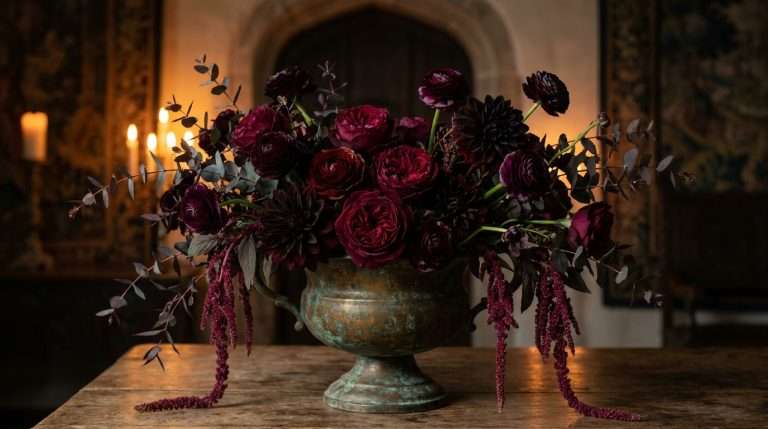
Overflowing arrangements in large-scale vessels (urns, footed bowls, tall candelabra bases) that spill across the table and upward toward the ceiling. Mixed bloom types are essential: roses, dahlias, ranunculus, peonies, trailing amaranth, all in dark tones. Oxblood, plum, deep burgundy, near-black. No single stems. The restraint is in the palette, not the quantity.
Beyond the table, floral installations define the maximalist ceremony: suspended arrangements over the altar, ceremony arches dripping with blooms so dense they create their own shadow. A vamp romantic wedding shares this instinct for floral drama. Moody maximalism applies the principle everywhere, not just at the focal point.
Tablescapes: Layer Everything
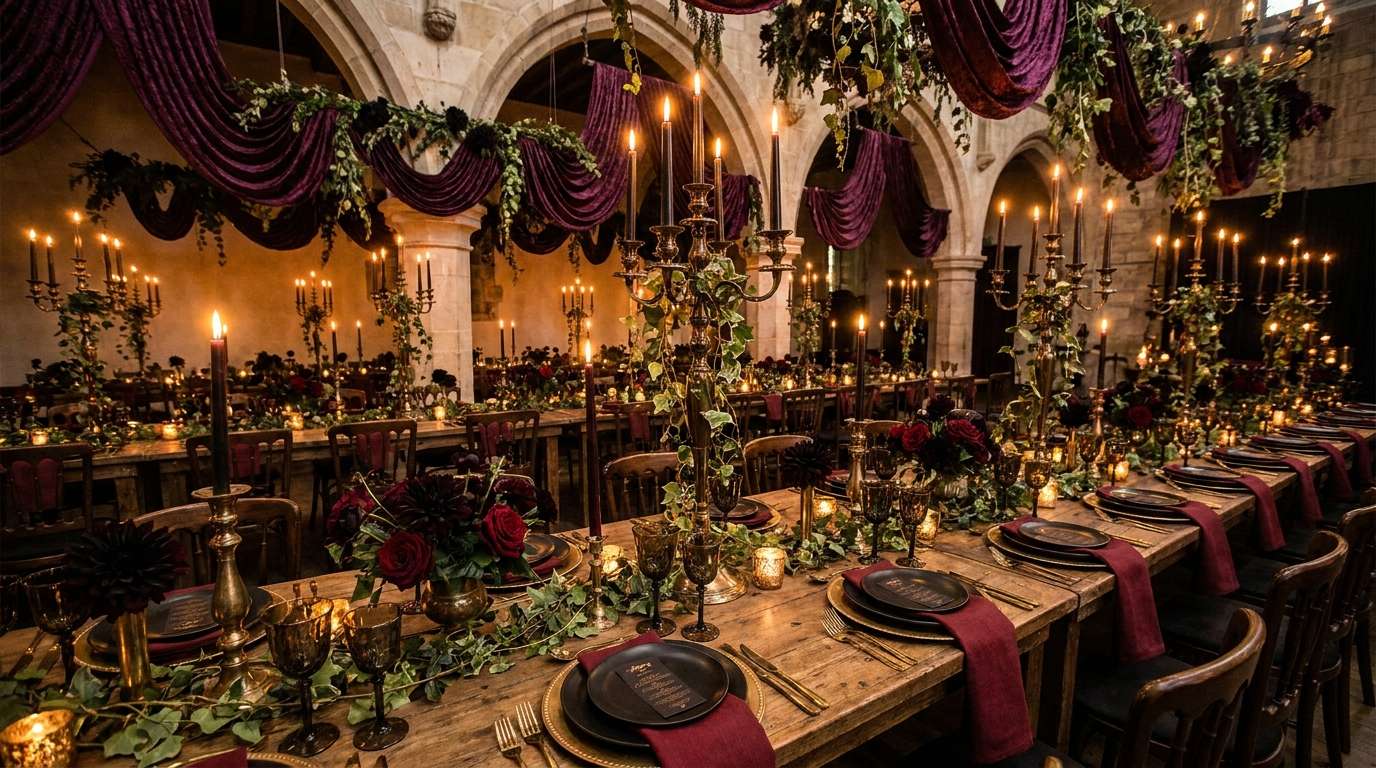
Chargers beneath plates beneath napkins. Metallic flatware. Dark glassware. Candles at multiple heights creating a landscape of light across the table. Stationery at every position: menu cards, place cards, table numbers. When they all carry the same visual identity, the effect is immersive rather than cluttered.
Multiple textures are non-negotiable. Velvet runners, linen napkins, metallic accents, glass, wax, paper. The eye finds something new each time it moves from surface to surface. That discovery is maximalism done right.
Lighting: Drama Over Function
Candles everywhere. Tapers in brass holders lining the table. Pillars on the floor flanking the aisle. Votives in dark glass clustered on windowsills. Candelabras as centerpiece anchors. Warm uplighting washing the walls in amber or deep rose. No harsh overhead lighting. The atmosphere should announce itself before any single element does. In a dark fantasy wedding, lighting is the ingredient that transforms decor into world-building.
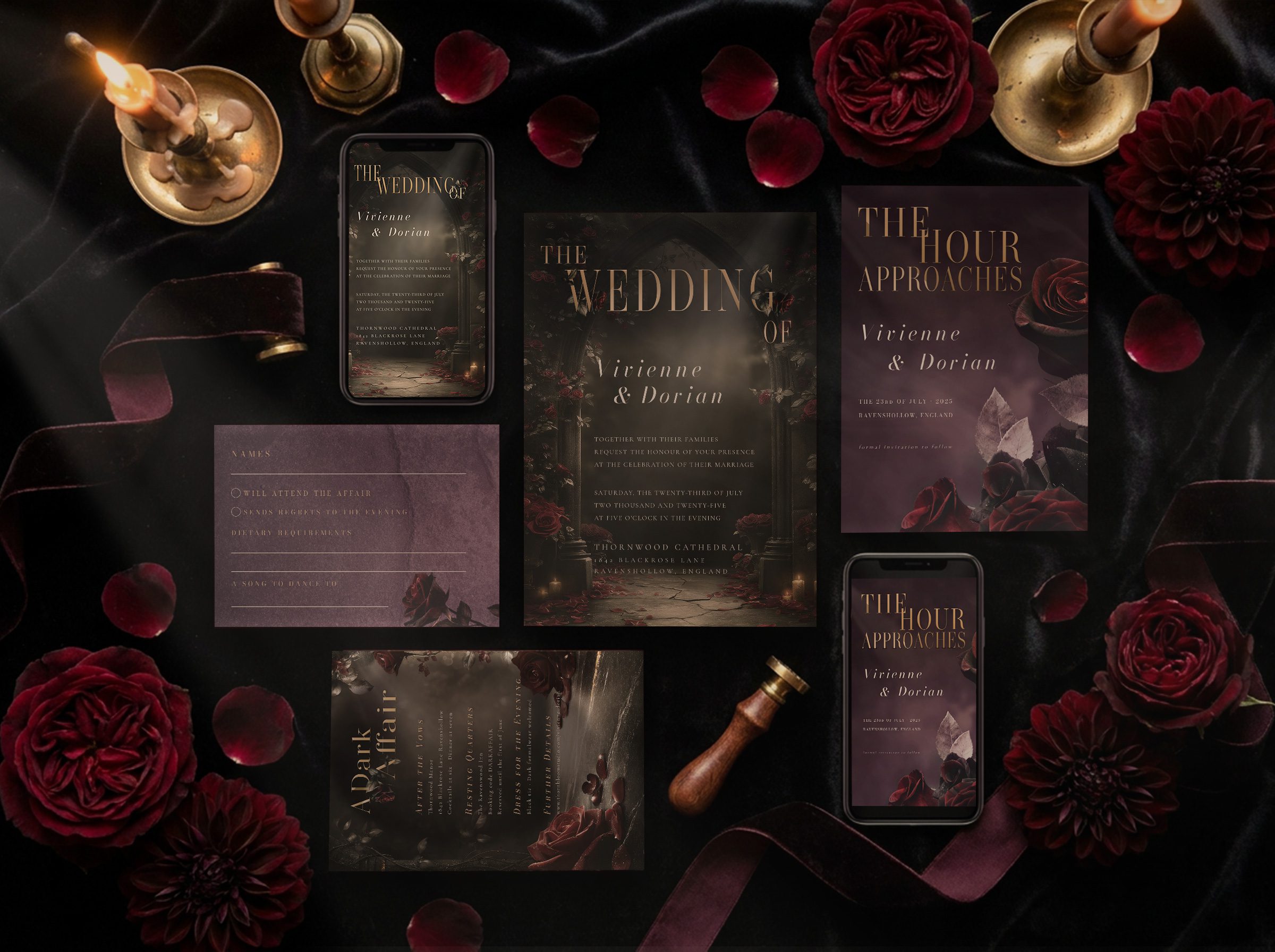
Maximalist Stationery
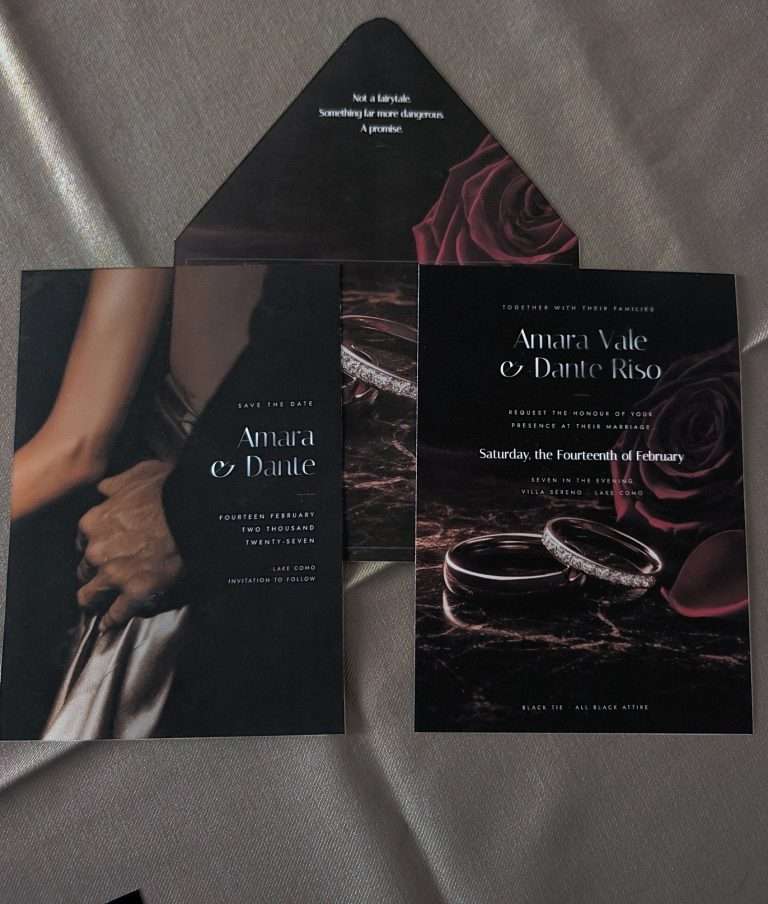
Maximalist stationery is not white space with a border. It is full-bleed illustrated artwork that covers every edge: metallic typography, ornate details, coordinated pieces from invitation through favor tags. The more pieces in the suite, the more surfaces carry the design language from the mailbox into the event itself. Each one is another layer in the immersive stack: menu cards, place cards, table numbers, programs, welcome signs, seating charts.
ThornBloom’s Grand Wedding Suite is the maximalist’s answer to stationery: 27 coordinated pieces at $249.99, covering every touchpoint from save the date through thank you card, including a ThornBloom Wedding Website. It is designed so that nothing on the table, at the entrance or in the ceremony looks like an afterthought. For couples starting smaller, the Dark Romance Essentials Suite (six foundational pieces) anchors the visual identity with room to add pieces as planning progresses.
The stationery suite is the thread that connects a maximalist wedding from first impression to last. When every piece shares the same illustrated artwork, the same metallic accents, the same dark palette, the abundance reads as intentional. That is the line between maximalism and mess: a unifying design language running through everything guests see and touch. Knowing what stationery pieces you need makes the difference between layered richness and scattered excess.
Maximalism with Intention
Moody maximalism is not “buy everything.” It is “choose richly and commit fully.” The difference between maximalism and mess is a unifying palette, a consistent design language, and a coordinated stationery suite that carries one visual identity from mailbox to reception table.
One palette. Every surface. No restraint. That is the moody maximalist wedding: abundance with purpose, darkness with depth, and not a single apology for wanting more.
Explore the gothic wedding aesthetic for a cooler take on dark abundance, or browse the Dark Romance and Enchanted Forest collections to find the palette that matches your maximalist vision.